Miguel de Unamuno explored identity, connectedness, cosmology and the meaning of life
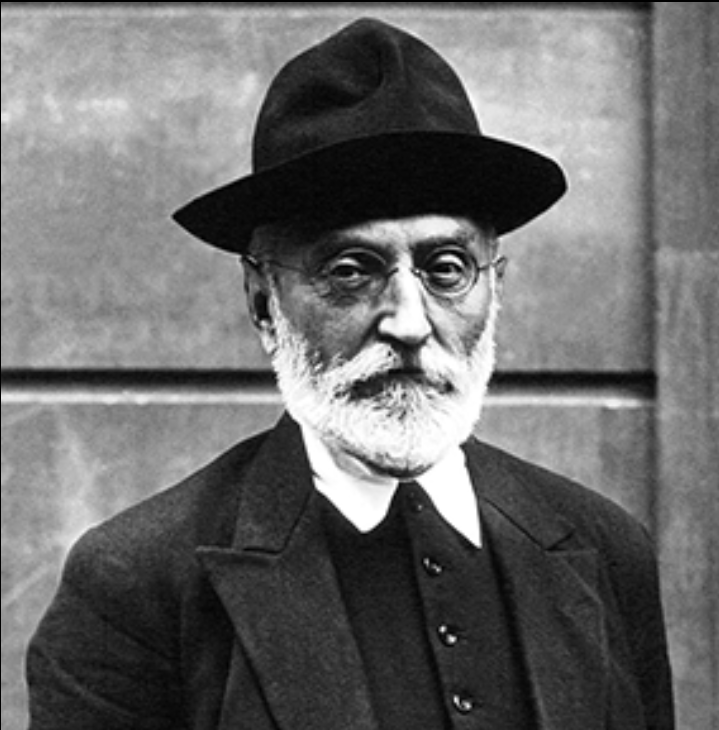
Miguel de Unamuno (1864–1936) was a Spanish writer, philosopher and Rector of the University of Salamanca, possibly the oldest university in Spain. He lived most of his life in Salamanca, serving as Rector and turning the university into a centre of free thought and cultural renewal. He was one of the most influential intellectuals of modern Spain.
In this work, he explored identity, connectedness, cosmology and the meaning of life, becoming a key figure of Spain’s Generation of ’98. This was an intellectual and literary movement that emerged after Spain’s 1898 defeat in the Spanish–American War, which resulted in the loss of its last major overseas colonies (Cuba, Puerto Rico, the Philippines). This triggered deep reflection on Spain’s national identity, moral condition, and political decline. Unamuno played a role by calling for a spiritual and cultural rebirth, grounded in critical self-examination, education and knowledge of inner self, rather than nostalgia or militarism.
His essays and speeches aimed to awaken civic conscience and bring out critical thinking among Spaniards. Civic conscience is the internalized sense of moral responsibility that individuals feel toward their community, society and public life. It involves ethical awareness that assists citizens in thinking about power, justice and their duties to others within a political community. Critical thinking is the disciplined practice of analysing information, assumptions and arguments with clarity, logic and intellectual honesty. It involves evaluating evidence, questioning claims, recognising bias, and forming well-reasoned judgments rather than accepting ideas at face value. In this regard, Unamuno sought to cultivate a citizenry capable of resisting dogmatism and blind ideological conformity by encouraging ethical responsibility, intellectual integrity, and a lived commitment to human dignity.
Major works
Miguel de Unamuno’s major works include Del sentimiento trágico de la vida (The Tragic Sense of Life) and Niebla (Mist). In these works, Unamuno urges individuals to think, believe and act in accordance with an awakened personal conscience rather than submitting to dogma or unquestioned ideology. For him, authentic conscience emerges from sustained reflection, study, inner struggle and moral responsibility, through which individuals discern what is meaningful and just, or harmful, in human life. He valued moral integrity and intellectual integrity over obedience, grounding freedom not in abstract rationalism but in lived truth shaped by inner moral struggle, doubt (i.e. a vital condition of human life that prevents blind conformity and protects against submission) and commitment to human dignity. This outlook informed his opposition to authoritarianism, famously expressed in his 1936 confrontation with Spanish fascists when he declared: “You will win, but you will not convince”.
His The Tragic Sense of Life is a philosophical essay that moves even beyond the limits of purely rational thought, arguing that human existence is defined by a profound and irreducible tension between reason and faith. While rational reflection tells us that life ends in death, the human heart nevertheless yearns for immortality, meaning and spiritual fulfilment. Unamuno contends that this unresolved struggle — one that cannot be settled by rational certainty alone — is not a defect to be overcome but a genuine source of spiritual depth and vitality. This inner struggle puts ethical responsibility at the forefront and is essential for developing an authentic individuality for each person as they confront existence. For Unamuno, true humanity emerges not from escaping this tension, but from embracing it with honesty and courage, finding meaning in the yearning for immortality (or spiritual perfection) and the commitment to live authentically amid uncertainty.
In Mist, Unamuno dramatizes these ideas through fiction by presenting a novel in which the protagonist becomes aware of his own fictional status and directly confronts his creator. The work explores personal identity, free will and existential doubt by questioning the nature of existence, the meaning of life, and the individual’s place in the world. It suggests that the self is not fixed or predetermined, but is continuously shaped through inner conflict, reflection, dialogue with others, and engagement with fate. In doing so, the novel exemplifies Unamuno’s view that human identity emerges through struggle rather than certainty.
Condemning blind ideological conformity
Throughout his life, Unamuno condemned blind ideological conformity, whether religious, political or nationalist. His concern lay with the unthinking submission of individuals to rigid doctrines at the expense of personal conscience, inner struggle, and authentic human life. He urged individuals to think and believe for themselves, advocating what might be called a ‘faith of doubt’, i.e. a deeply personal, questioning spirituality that values sincerity and moral responsibility over any fixed or imposed orthodoxy.
His confrontation with fascist slogans such as ¡Viva la muerte! (Long live death) is an example. The slogan glorified death, sacrifice and violence in the service of the nation and its political authority, inverting ordinary moral values by celebrating destruction over human life. During the 12 October 1936 ceremony at the University of Salamanca, when fascists shouted ¡Viva la muerte! in the hall, he declared before fascist general José Millán-Astray words to the effect: “This is the temple of intelligence, and I am its high priest. You are profaning its sacred domain. You will win, because you have enough brute force. But you will not convince. In order to convince it is necessary to persuade, and to persuade you will need something that you lack: reason and right in the struggle. I see it is useless to ask you to think of Spain. I have spoken.” This response epitomized his defence of reason, compassion and moral courage against totalitarian thinking that dehumanized individuals and rejected ethical responsibility.
Intrahistoria – the life beneath history
Unamuno was sceptical of scientific positivism and material progress when they dismissed spiritual life and ignored what he perceived as the soul’s needs. By the “soul’s need” he meant irreducible human aspects of need for meaning, conscience, struggle, hope and personal dignity. Even if reason is correct, human beings need more than correctness to live.
He argued that Spain was in danger of losing its spiritual and ethical depth, and he responded by emphasising what he called intrahistoria — the quiet, enduring moral life of ordinary people that unfolds beneath the surface of grand historical events. This concept formed a central part of his social analysis in which he sought to reconcile notions of progress with spiritual authenticity. Progress conceived primarily in material, economic or technological terms risks weakening ethical depth and spiritual meaning.
For Unamuno, progress requires the moral and spiritual deepening of humanity. Genuine progress occurs when individuals and societies cultivate ethical responsibility and compassion, develop an awakened conscience, and are aware of human suffering and mortality. Material, economic or technical progress without these dimensions, he argued, leads to spiritual impoverishment. So, notions of progress that ignored the inner life, produced spiritual emptiness rather than genuine advancement.
To counter deficient views of progress, he emphasized that the real essence of a nation lies in the daily lives, faith and struggles of ordinary people, not in wars or political power. This intrahistoria was the psychological backbone of civilization. To improve the lives of ordinary people, including moral and spiritual dimensions, reflects progress. Intrahistoria also expressed his belief in the need for social continuity, humility and human depth beyond historical noise or the big events of history.
Another reason for centering on lived experiences over abstract historical narratives was that Unamuno opposed ideologies that treated human beings as instruments of historical forces. This includes positivist, nationalist and technocratic ideologies. Intrahistoria redirected attention to everyday acts of care, faith, endurance and responsibility, as well as the slow formation of character across generations (a part of social continuity).
Unamuno valued social continuity alongside change, viewing intrahistoria as the enduring moral substratum beneath moments of historical rupture. While political regimes, institutions and technologies may change, he believed that the moral life of ordinary people persists across time. This moral life is expressed less through dramatic acts or ideological commitments than through honesty in daily conduct, care for family and neighbours, fidelity to conscience, and perseverance amid suffering and uncertainty. Accordingly, any meaningful conception of progress must take these enduring moral expressions into account. This also respects cultural memory and ethical traditions, and avoids severing society from its spiritual roots.
Accordingly, modernity should preserve spiritual struggle, which has always existed, but which modern life often leaves insufficient space for understanding. In particular around unresolved questions of meaning and the enduring tension between faith and reason. Rather than offering fixed doctrines or final answers, Unamuno insisted that doubt, inner conflict and existential struggle are essential to authentic spirituality. Through intrahistoria, he sought to show how modern developments could coexist with spiritual depth, that is without erasing or diminishing the inner moral, existential, and spiritual dimensions of human experience. Basically, this reframes where meaning and progress are located, without rejecting modernity itself.
Lastly, Unamuno resisted dehumanization by mass society, fearing that modern mass politics and industrialization would dissolve individuality into anonymity and conformity. He believed such massification reduced persons to interchangeable units within ideological or bureaucratic systems, stripping them of moral agency and inner freedom. His intrahistoria therefore defended the irreplaceable value of each person, the ethical bonds of small communities and their social cohesion, and the cultivation and exercise of personal conscience as safeguards against the flattening effects of mass society.
Conclusion
Taking all the above points together, Miguel de Unamuno’s thoughts present a deep humanistic response to problems that arise from modernity, nationalism and ideological absolutism. Through his insistence on awakened personal conscience, critical thinking, and that an enduring moral sense exists in ordinary people, he offered a vision of progress grounded not in the material or economic, but in ethical responsibility, inner struggle, and spiritual authenticity.
His concept of intrahistoria reframed history from below, locating the true strength of a society in the quiet continuity of everyday life rather than in grand events, mass movements, or technological advance alone. In doing so, Unamuno sought to preserve human dignity, individuality, and meaning amid rapid social change. This emphasis remains necessary to this day, remembering that brute force may prevail temporarily but cannot command ethical legitimacy. It is qualities like morality, conscience, compassion and seeking spiritual fulfilment that remain essential for human life.
https://open.substack.com/pub/macropsychic/p/miguel-de-unamuno-influential-intellectual
